
Holding crypto in a tax-advantaged retirement account is increasingly becoming part of long-term wealth planning.
But not all IRAs are created equal, and investors often wonder whether a Traditional IRA, the most common type, can legally and structurally accommodate digital assets like Bitcoin or Ethereum.
This blog outlines the rules, benefits, and restrictions of holding crypto in a Traditional IRA in 2025.
What is a Traditional IRA and how does it typically work?
A Traditional IRA allows individuals to contribute pre-tax income toward retirement savings, with taxes deferred until withdrawals begin—usually after age 59½. These accounts are governed by IRS rules that define eligible assets, contribution limits, and custodial requirements.
Traditionally, IRA assets have included:
- Stocks and ETFs
- Bonds and mutual funds
- Certain alternative assets (e.g., real estate, private equity, gold)
Cryptocurrency, while not explicitly listed, qualifies under the IRS definition of property and is allowed, if held through a self-directed IRA.
Note: Traditional IRAs offered by standard brokerages do not support crypto. Only self-directed IRAs can hold digital assets.
Understanding the self-directed IRA model is important before considering crypto allocations.
How crypto is held within a Traditional IRA
To hold crypto in a Traditional IRA, investors must open a self-directed IRA (SDIRA) with a qualified custodian that allows alternative assets. This setup is what enables crypto holdings while preserving the tax-deferred structure of the Traditional IRA.
Key elements involved include:
- A self-directed IRA custodian: Handles IRS compliance and reporting
- A digital asset exchange partner: Facilitates crypto trades
- A secure custody solution: Stores the crypto, typically through hot and cold wallets
The investor cannot take direct possession of crypto. Doing so risks disqualifying the IRA and triggering taxes and penalties.
Note: All crypto within a Traditional IRA must remain under qualified custodial control to maintain tax-deferred status.
Next, it’s helpful to compare Traditional and Roth IRAs when it comes to crypto exposure.
Comparing Traditional vs Roth IRAs for crypto investing
Both Traditional and Roth IRAs can hold crypto if structured through a self-directed IRA. The core difference lies in how taxes are handled:
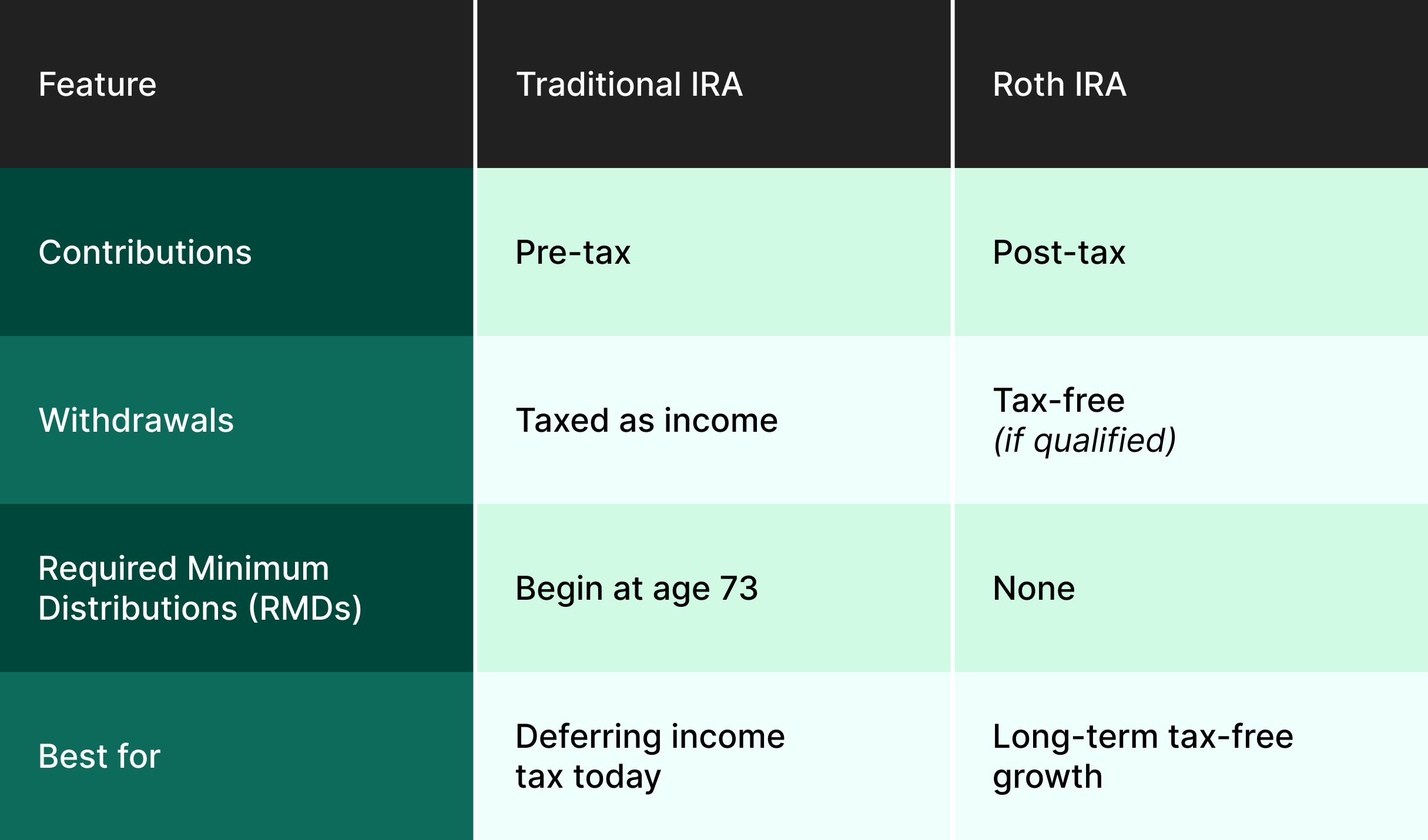
Investors choosing between the two must weigh short-term tax benefits against long-term gains.
Note: Income limits may restrict Roth IRA eligibility, but not Traditional IRA contributions (though deductibility may vary).
Once investors understand the tax framework, it’s also critical to consider the compliance requirements.
IRS rules and compliance for holding crypto in an IRA
The IRS allows crypto in IRAs but applies strict rules to ensure tax advantages aren’t misused. Key compliance areas include:
- Prohibited transactions: Investors cannot use IRA-held crypto for personal benefit, payments, or lending
- Disqualified persons: Family members or business entities connected to the investor cannot transact with the IRA
- Valuation and reporting: Fair market value must be reported annually using a qualified custodian’s statement
- Storage requirements: Assets must remain in custodial control—not personal wallets
Note: Violation of these rules can trigger full taxation and a 10% penalty if under age 59½.
With rules clarified, the final consideration is how investors can set up a Traditional IRA for crypto exposure.
How to hold crypto in a Traditional IRA in 2025
1. Creating a crypto IRA account on Alto CryptoIRA®
- Visit Alto and sign-in with your email and password.
- Verify your email and click "Begin Verification" to input your personal information.
- Select traditional or Roth Alto CryptoIRA®
- Provide your phone number, review your details, and e-sign your name in the designated field.
- Click “Create my Alto CryptoIRA® ” to complete the process and start funding your account.
2. Fund your account
You can fund your Alto CryptoIRA® in three convenient ways:
- Cash contributions: Deposit funds directly from your bank account, subject to annual IRS contribution limits.
- IRA transfers: Directly move funds from an existing IRA without impacting contribution limits.
- Rollovers: Transfer funds from a 401(k) or other qualified plans into your crypto IRA.
3. Choose your investments
With Alto’s partnership with Coinbase, you can access over 250+ cryptocurrencies, including Bitcoin, Ethereum, Dogecoin and other emerging digital assets.
4. Monitor and manage your crypto IRA
Alto’s intuitive platform makes it easy to manage your investments. Real-time trading and 24/7 access allow you to take advantage of market opportunities while benefiting from institutional-grade security.